Mainstreaming FIMI
Published by Foundation for Media Alternatives (FMA) on
Mainstreaming FIMI
The Foundation for Media Alternatives (FMA) did two activities in relation to Mainstreaming FIMI. The first activity was the conduct of a focus group discussion (FGD) with two participant groups – women in urban communities, and young people (high school students). The second activity is the development of a short FIMI explainer for posting on social media.
A. Mainstreaming FIMI through Storytelling
Foreign Information Manipulation and Interference or FIMI is a new term for many Filipinos. They are not familiar with it, although some of the issues involving FIMI cases are familiar to some. Terms such as “fake news” and scams are more easily understood compared to FIMI, as many have experienced them.
The activity: This activity is part of the multi-sectoral collaborative activity on Mainstreaming FIMI. Focus group discussions with young people and urban poor women based in Metro Manila will be conducted to determine how they relate to and understand FIMI. The activity ties up with the fictional FIMI stories developed by Democracy.ph.
Objective: To test how effective fictional stories are in making people understand the concept of FIMI
Method: Conduct of two FGDs – one with urban poor women and another with high school students to test how effective story telling is when explaining FIMI.
Fictional FIMI stories developed by Democracy.net will be used for two participant groups. The story for the women participants revolves around the conflict that ensued among couples in Barangay X after an interview conducted by a female Chinese reporter among a group men in the said barangay. The story for the high school participants is about the eerie and unexplained lights and noises coming from one of the classrooms in a public high school, which turned out to be a troll farm.
Graphic illustrations will be used while presenting the stories in order to make them clearer for the participants.
After the story telling, the FGD participants can ask questions or clarifications. This is also a way to further explain what FIMI is. Pre and post test questions will be given to the FGD participants to see if there has been an improvement in their understanding of FIMI after the storytelling.
Findings
- FGD with urban poor women
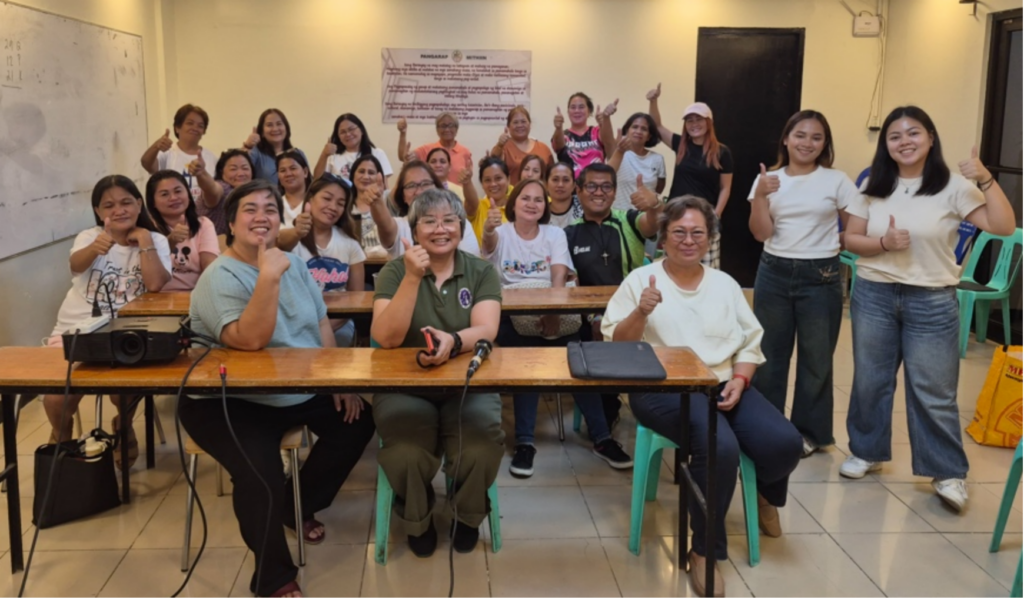
On April 29, 2026 FMA conducted an FGD in Barangay Bagbag that was attended by 20 women from the community. These are mostly women who are active in their barangay and are leaders of groups. The activity was held at the Barangay Hall of Bagbag.
All the FGD participants are not familiar with FIMI. It is the first time they heard of it.
The story developed by Democracy.net, which will be used for the activity, mentions the West Philippine Sea (WPS) in relation to FIMI. It was a starting point for discussion In order to gauge how the women understand the issues surrounding the WPS. According to the women participants, while they have heard of the West Philippine Sea, it is not something that is commonly discussed in their community. They are aware though of Filipinos fishing in that area, and have seen on the news the clashes between the Philippine Coast Guard and their Chinese counterparts. The women said that they are more interested in issues that affect their families, like putting food on the table, being able to pay for electricity, and the high cost of consumer goods. These are the issues they talk and argue about in their families and not political ones like the WPS.
The story read to the women is about the conflict that ensued among couples in Barangay X after an interview conducted by a female Chinese reporter among a group men regarding the West Philippine Sea. In the story, the female Chinese reporter, who can speak Filipino, wanted to know the opinion of Filipinos on the WPS. But before getting their opinions, she showed them posts on social media saying that the WPS belongs to China. One of the men in the barangay said he has heard on radio about the Arbitral Tribunal’s decision on the ownership of the WPS. The reporter then showed the men an old news article saying that even the president of the Philippines says that it is not yet the proper time for China and the Philippines to talk about the arbitral ruling on the WPS. She also showed them posts by social media influencers, with many likes and shares, to prove that many Filipinos are of the opinion that the WPS is not worth fighting for. When the camera was turned on and the reporter started interviewing the men, many said Filipinos should not fight for ownership of the WPS. Only one person who was interviewed said he would die fighting for his country. The portion of his interview was edited out. The headline story that was posted online is that many Filipinos do not believe that they should fight for the WPS. After the story was posted, the wives of the men who were interviewed asked their husbands why they answered that way. Some of the wives said the men looked like cowards for the answers they gave.
The fictional story gave the women in the community an idea of what FIMI is. It was made clear how another country tries to change the thinking or behavior of people towards a certain topic using social media and traditional media.
Before the start of the story telling, a short quiz was given to the women to check their understanding of FIMI. After the story telling, a post-test with the same questions was administered to them. There was improvement in the scores that the women got, which only meant that their understanding of FIMI improved.
The Barangay Administrator who was present during the FGD shared that they recently had a discussion about the importance of information with the women. The FIMI workshop served as a follow up to their previous discussion with the women.
Dana Batnag from Democracy.net, who wrote the fictional story, was present at the FGD. She asked the women what would be an effective plot for the story to be more relatable among women in communities. The women said they do not go into arguments or fights with their husbands just because of an issue that they are not familiar with. The feedback of the women about the story will be used to better frame future stories that may be developed.
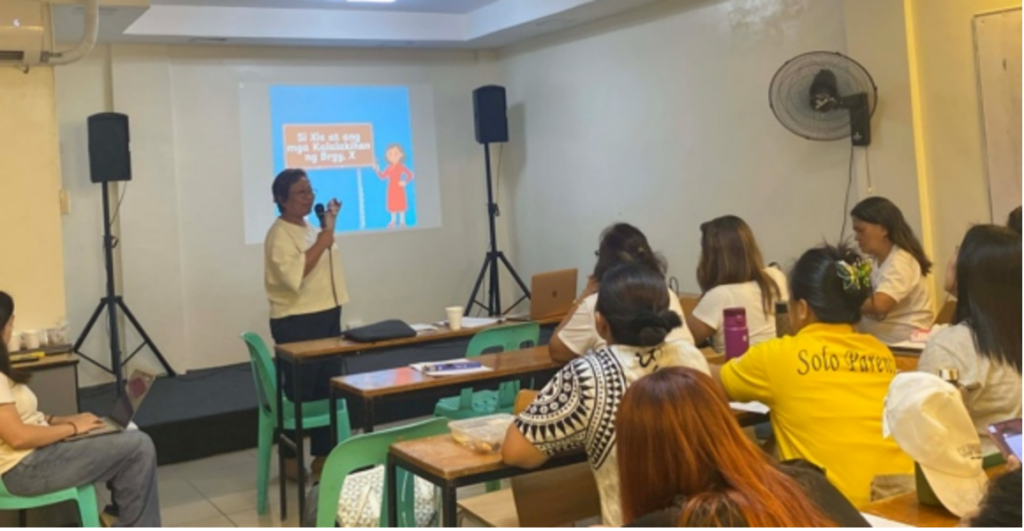
2. FGD with high school students from Barangay Commonwealth, Quezon City
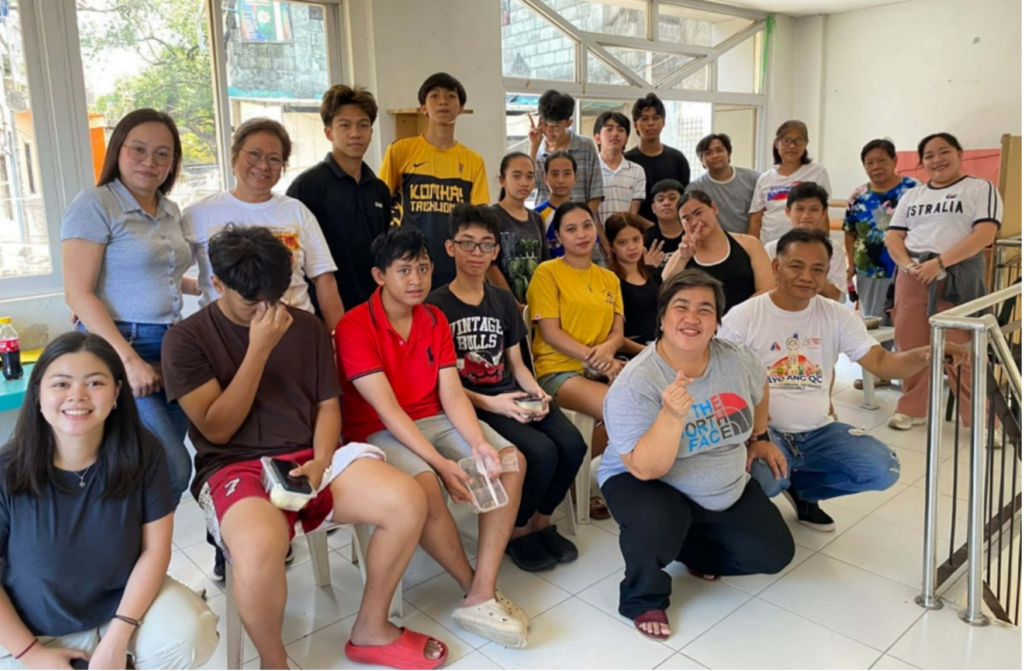
16 high school students aged 15 to 19 years old attended the FGD which was held at the Katena Multi-purpose Hall in Barangay Commonwealth, Quezon City.
Before the story telling started, FMA explained the objective of the FGD.
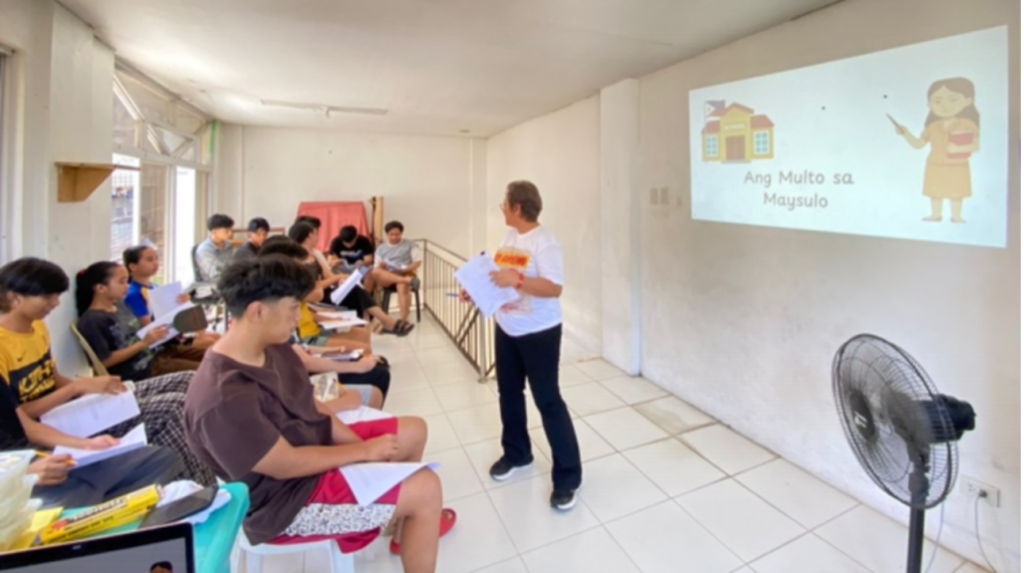
All the students who participated in the FGD said they do not know FIMI and have never heard of it. They are, however, familiar with “fake news,” having received posts and information from people known and unknown to them.
Similar to the FGD with women, graphic illustrations were incorporated in the story telling. FMA also tried to make the story more participative by including the participants in the story telling activity. Those who volunteered were assigned characters in the story, and were asked to read the lines of the character given to them.
Pre and post tests were also given to the students. There was improvement in the scores after the story telling.
The story for the high school participants is about the eerie and unexplained lights and noises coming from one of the classrooms in a public high school. This incident happened shortly after a new substitute teacher, who happened to be Chinese, was assigned to the school. Some students went on to investigate the noises and lights they saw, and later learned that it was from the room assigned to the Chinese teacher. When they had a chance to open the room, they discovered several mobile phones that were being used to spread false information. The students anonymously reported what they saw in the room, and the substitute teacher hurriedly left the school. Someone from the Coast Guard went to the school to explain what FIMI is to the teachers and students.
After the story telling, the floor was opened for questions and feedback. One student shared that in school, they have a subject that teaches them about the value of information and being safe online. Other students shared that they have experienced getting posts from unknown people, and/or received “fake news”. One student shared that in their school, a member of the student council received an online message from someone anonymous that there was a bomb planted in the school. It was immediately reported to the teachers and classes were suspended. There was a thorough search for the bomb but none was found. The message was confirmed to be a hoax.
The students were asked what they learned from the storytelling activity. One of their learning is that there is a need to be critical of the information that they receive. Not because it comes from someone they know means that it is true and should be shared with other people. Another learning is to do research on issues one is not familiar with, but at the same time they should be conscious of the source of their information. They also said asking those who know or seeking the advice of experts in the field would be help clarify issues.
Note: Two weeks after the FIMI story telling with the high school students in Brgy. Commonwealth, some women in the barangay also became interested in learning about FIMI.
Conclusion and Recommendations
FIMI is not a familiar term with many Filipinos. Although they may have come across FIMI stories, it is difficult for many to distinguish it from disinformation or information operations. To mainstream FIMI, there needs to be an explanation of what it is all about and why it matters. It is useful to give examples that most people are familiar with.
Story telling alone, while helpful in explaining FIMI, is not enough. There needs to be a discussion after the story to further explain it to the participants.
According to the FGD participants, a series of lectures, discussions, and presentation of examples, like the story telling, would help them better understand what FIMI is.
B. Mainstreaming FIMI through social media
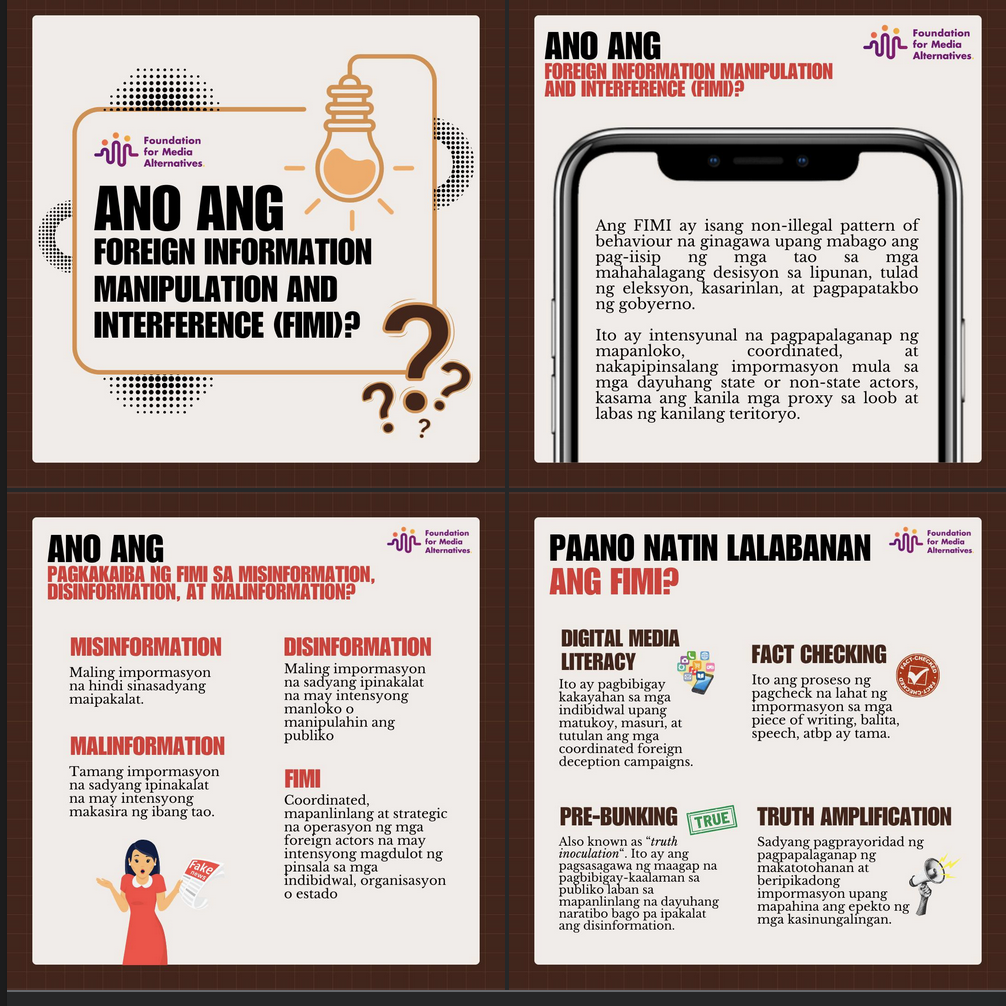
To complement the conduct of FGDs through story-telling in order to mainstream FIMI, FMA also developed a short FIMI explainer in Filipino that was posted on FMA’s social media accounts. Prior to posting, we consulted with Ms. Janina Santos. The initial post was on May 25 at FMA’s Facebook account. On March 26, the said posts were also shared on FMA’s Instagram and TikTok accounts.
0 Comments