Image-Based Abuse in the Philippines: Why “Consent Matters”
Published by Foundation for Media Alternatives (FMA) on
Image-Based Abuse in the Philippines: Why “Consent Matters”
In the Philippines, sharing intimate photos or videos of a person without their permission – whether publicizing, distributing or threatening to expose them – is not only wrong, it’s also a crime. Unfortunately, many still do not realize just how serious the consequences can be.
What is Image-Based Abuse & Why It’s a Big Problem
Image-based abuse refers to situations where intimate or private photos/videos – often shared in confidence – are misused: reposted, distributed, or weaponized as threats. A common and troubling example is sextortion, where someone uses private images/videos to blackmail the victim, demanding more images, money, or other favors.
According to a recent report by Foundation for Media Alternatives (FMA), sextortion cases in the Philippines are growing disproportionately affecting women, girls, and members of the LGBTQ+ community.
Why does this happen? Often abusers:
- build trust via fake social media or dating profiles;
- ask for “just one” intimate photo or video;
- secretly take screenshots or record private video calls;
- then threaten to share or sell those images if the victim doesn’t comply with demands.
Even worse: many victims stay silent because of shame, fear of stigma, or cultural pressure. This silence makes the problem harder to address, and emboldens perpetrators.
The Law: Your Rights Under the Anti-Photo and Video Voyeurism Act of 2009 (RA 9995)
The Philippines has a law that protects individuals’ privacy and dignity when it comes to intimate and private images.
Under this law:
- It’s illegal to take a photo or video of someone’s private area or intimate act without their consent, especially under circumstances where the person expects privacy.
- It’s also illegal to share, distribute, publish, or broadcast such intimate photos/videos without the person’s consent, even if the original photo or video was consensually made.
- Violating the law can result in serious penalties: 3 to 7 years in prison and/or a fine between ₱100,000 and ₱500,000.
In short: once intimate photos or videos are shared beyond what was originally agreed on including sending them to others, posting online, or threatening to expose them, that is a criminal offense.
What You Can Do: Protect Yourself & Others
If you or someone you know is dealing with image-based abuse (sharing intimate photos without consent, sextortion, threats to expose images), here are some important steps:
- Don’t comply with demands. Don’t send more images, don’t pay, don’t negotiate. Perpetrators often keep escalating.
- Preserve evidence. Screenshot any messages, threats, or URLs; save chat logs and media. These can help when reporting.
- Secure your accounts. Change passwords, enable two-factor authentication, log out from unknown devices — to prevent further breaches.
- Report the crime. Contact the appropriate authorities. For example: sometimes victims report to the police or to agencies that handle cybercrimes.
- Seek emotional support. Reach out to trusted adults, friends, counselors, or support groups. You don’t have to face this alone.
Why It Matters: The Human Cost of Image-Based Abuse
Image-based abuse and sextortion are more than just “online drama.” They:
- Violate a person’s right to privacy and dignity;
- Inflict emotional and psychological trauma such as fear, shame, depression, anxiety; many victims withdraw from social life or struggle with trust.
- Disrupt education, relationships, self-esteem, especially when the victims are minors or young people.
- Perpetuate cycles of abuse, silence, and impunity when not reported or addressed. That is why awareness about consent, privacy, and laws is critical.
Where to Get Help in the Philippines
If you or someone you know needs help:
- Contact Philippine National Police – Women and Children Protection Center (PNP-WCPC) at 0919-777-7377
- You may also reach the Commission on Human Rights of the Philippines (CHR) at (02) 8936-6107
- Consider reaching out to trusted adults, friends, or community support networks and remember: You are not alone
Consent Is Not Optional
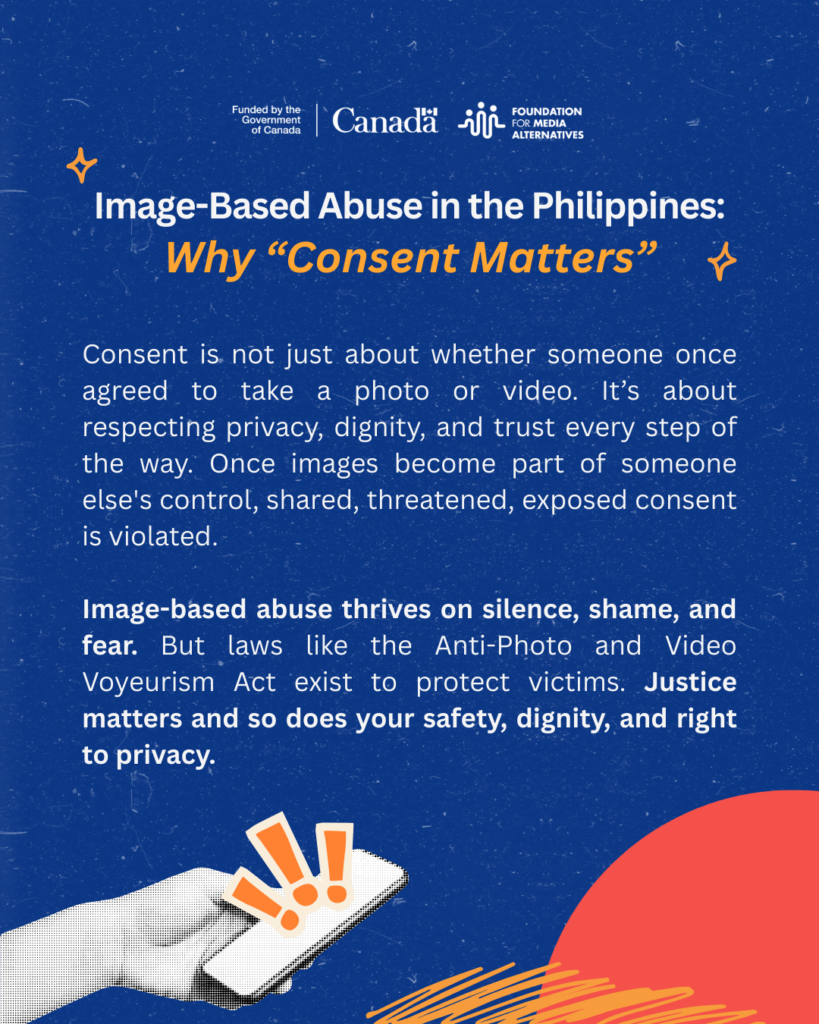
Consent is not just about whether someone once agreed to take a photo or video. It’s about respecting privacy, dignity, and trust every step of the way. Once images become part of someone else’s control, shared, threatened, exposed consent is violated.
Image-based abuse thrives on silence, shame, and fear. But laws like the Anti-Photo and Video Voyeurism Act exist to protect victims. Justice matters and so does your safety, dignity, and right to privacy.

0 Comments