Strengthening Feminist Strategies for Online Safety and GBV Response
Strengthening Feminist Strategies for Online Safety and GBV Response
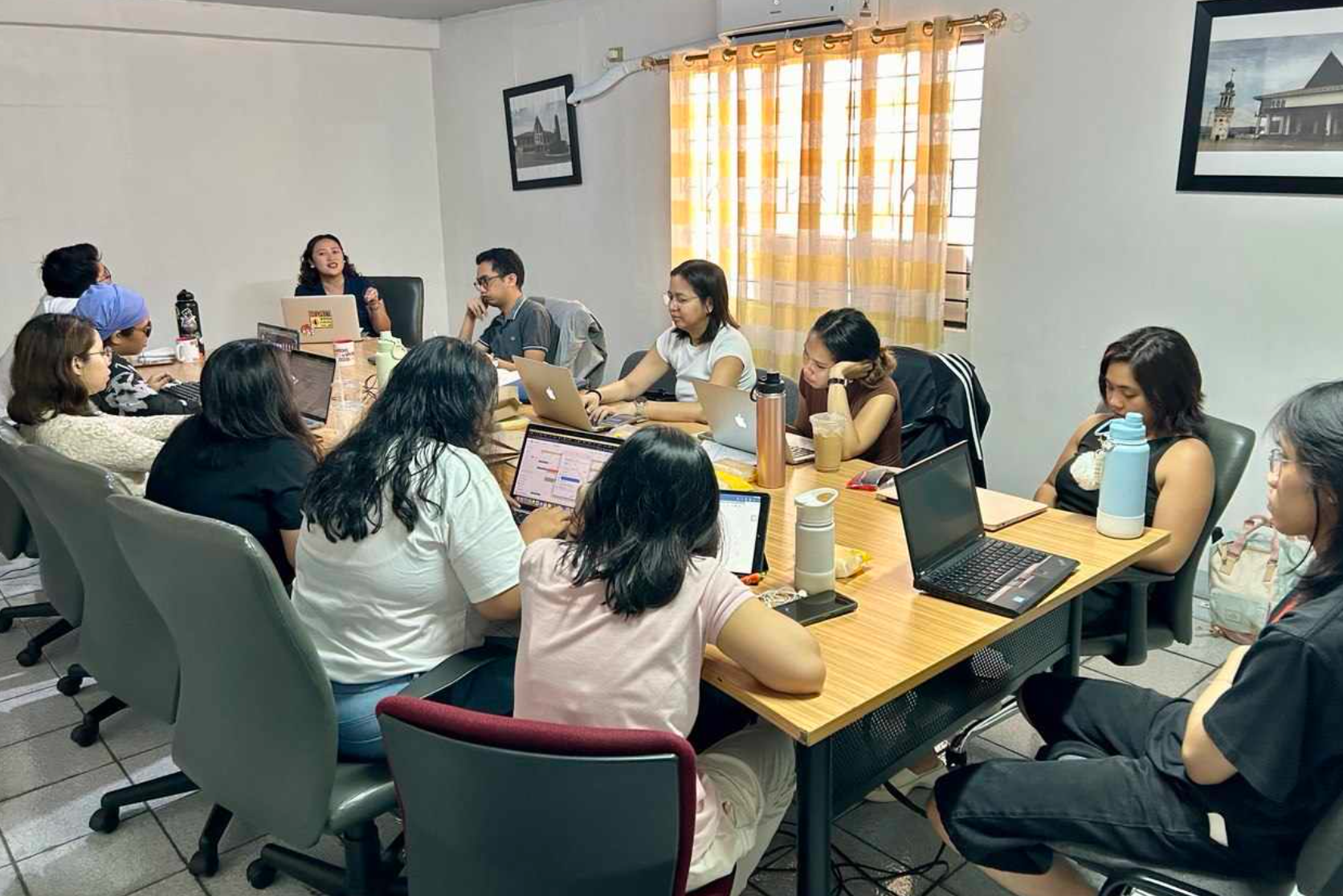
On May 29–30, 2024, the Foundation for Media Alternatives (FMA) conducted a two-day Feminist Strategies and Online Safety Training for 16 GBV responders in Quezon City. The training was organized in recognition of the increasing role of digital technologies in advocacy, legal assistance, and survivor support, as well as the growing risks associated with their use.
The training provided a feminist perspective on online safety, technology-facilitated gender-based violence (TFGBV), survivor-centered response, and holistic security. Rather than treating online safety as purely a technical concern, the sessions examined how digital risks intersect with gender, power, psychosocial well-being, physical safety, and organizational security.Through facilitated discussions, reflection, and practical case exercises, participants explored ways to strengthen their own security practices while providing safer and more responsive support to survivors of gender-based violence.
Understanding TFGBV Through a Feminist Lens
The training began with a discussion on technology-facilitated gender-based violence, including its different forms and manifestations. Participants examined how technology can be used to commit, assist, aggravate, or amplify gender-based violence, particularly against women and marginalized communities.
The discussion challenged the common perception that online violence is less serious because it takes place in a “virtual” environment. Participants reflected on how digital violence can have real and lasting emotional, psychological, social, economic, and physical consequences.
The group explored how technology can make violence persistent, replicable, and scalable. An incident can quickly spread across platforms through sharing, reposting, forwarding, and other forms of amplification. Examples discussed included online harassment, non-consensual sharing of intimate images, impersonation, sexualized threats, and Zoombombing.Participants recognized that TFGBV should not be viewed as an isolated online incident. Digital violence can escalate and intersect with offline threats and other forms of harm.
The role of secondary perpetrators was also discussed. Individuals who share, repost, or otherwise amplify abusive content may contribute to continued harm even when they were not responsible for initiating the original violation.
Building a Feminist Internet
The training introduced participants to the Feminist Principles of the Internet, focusing on the principles of Access, Mobility, Economy, Expression, and Agency.
Participants were encouraged to reflect on what a feminist internet means for the communities they serve. The discussion highlighted that digital spaces are shaped by existing social, political, and economic inequalities and that marginalized communities may experience exclusion and violence online.
The conversation shifted from simply asking how individuals can stay safe online toward asking how digital spaces themselves can become more inclusive, accessible, empowering, and responsive to the needs of survivors and marginalized communities.
Participants reflected on the importance of creating online spaces where people can participate, communicate, and express themselves without fear of harassment, discrimination, or violence.
Survivor-Centered Response
The training connected digital safety with existing practices in gender-based violence case management and survivor support.
Participants discussed the importance of a survivor-centered approach, which places the survivor's dignity, rights, safety, choices, and agency at the center of the response.
The discussion emphasized that responders should provide information and options rather than automatically determining what action a survivor should take. Building trust, protecting confidentiality, understanding the survivor's circumstances, and avoiding further harm were identified as essential elements of effective support.
Participants reflected on their own experiences and recognized that formal legal action is not necessarily the first or only option. Even when evidence exists, pursuing a case may create additional risks for a survivor. The appropriate response therefore depends on the survivor's wishes, circumstances, available resources, and assessment of risk.
This reinforced the importance of supporting survivors to make informed decisions and regain a sense of control over their situation.
Holistic Security
A major theme of the training was the need to understand security as holistic and interconnected.
Participants explored how digital security is connected to physical safety, psychosocial well-being, organizational security, and relationships. Security practices that focus only on devices, passwords, or accounts may overlook other vulnerabilities.
The group reflected on how chronic stress, exhaustion, and emotional distress can affect a responder's ability to assess risks and make decisions. Similarly, organizational gaps or weak support systems can undermine otherwise effective digital security practices.
Participants acknowledged that responders and survivors sometimes adopt security measures based on habit, tradition, or hearsay. The training encouraged them instead to assess their context, identify actual threats and vulnerabilities, and develop strategies appropriate to their circumstances.
The discussion emphasized that security planning should be risk-informed, context-specific, and regularly updated.
From Discussion to Practice
To apply the concepts discussed, participants worked in smaller groups using two real-life scenarios involving technology-facilitated gender-based violence. The exercise was adapted from Take Back the Tech!, a strategic game developed by feminist digital security practitioners and women's rights defenders.
Participants explored possible ways to respond to technology-facilitated violence and considered the risks and benefits of different strategies.
The exercise reinforced that there is no single or universal solution to TFGBV cases. Strategies must be guided by the survivor's priorities, consent, safety, and circumstances.
Participants also recognized the importance of support networks. Responding to online violence should not be an individual responsibility placed solely on the survivor or responder. Collective support, trusted relationships, and access to appropriate legal, psychosocial, and digital security resources can strengthen the overall response.
Key Reflections and Recommendations
The two-day training generated several important reflections. Participants recognized that online violence is real violence, and that digital harms can have significant offline consequences. They also recognized that technology can amplify existing gender inequalities and create new ways for violence to spread.
The training reinforced that survivor agency must remain central. Responders should help survivors understand their options while respecting their decisions. At the same time, security must be understood holistically, with digital, physical, psychosocial, organizational, and collective dimensions considered together.
Moving forward, the following recommendations emerged:
1. Conduct an individual capacity assessment to identify participants' digital security knowledge, skills, and support needs.
2. Undertake a comprehensive organizational needs assessment before future trainings to better tailor activities to participants' varying levels of knowledge and experience.
2. Provide follow-up technical assistance and consultations to support participants in applying the learning to actual cases and organizational practices.
4. Integrate digital safety into existing GBV case management and referral systems, including risk assessment, documentation, legal assistance, and survivor support.
5. Provide dedicated time for future trainings so participants can fully focus and engage without competing meetings or activities.
Conclusion
The two-day Feminist Strategies and Online Safety Training provided GBV responders with an opportunity to deepen their understanding of TFGBV while reflecting on how feminist principles can inform online safety and survivor support.
More than a technical digital security training, the activity highlighted the importance of agency, context, collective care, and holistic security. Participants were encouraged to look beyond individual incidents and consider the broader systems, relationships, and risks surrounding technology-facilitated violence.
The training ultimately reinforced a shared understanding that effective responses to TFGBV must be survivor-centered, feminist, context-specific, and collective - ensuring that both survivors and responders have the knowledge, support, and resources needed to navigate digital risks safely and with greater agency.


0 Comments