Building Feminist and Survivor-Centered Responses to Technology-Facilitated Gender-Based Violence in Naga City
Building Feminist and Survivor-Centered Responses to Technology-Facilitated
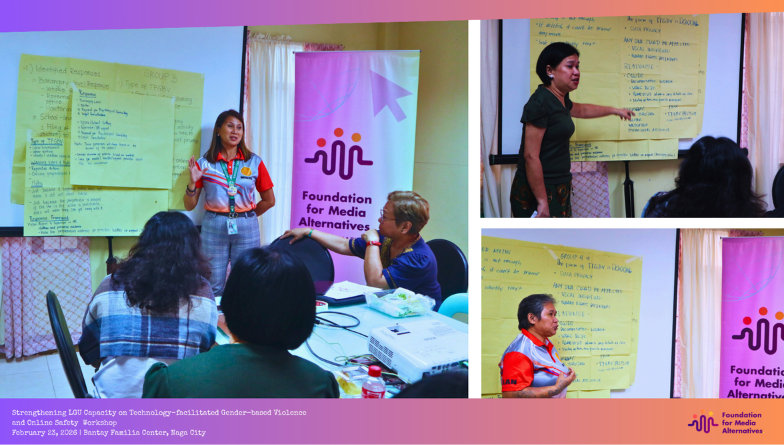
NAGA CITY, Philippines - February 23, 2026. Technology-facilitated gender-based violence (TFGBV) is not confined to screens. It can threaten people’s safety, dignity, privacy, mental well-being, and participation in their communities. Recognizing the need for stronger and more coordinated local responses, the Foundation for Media Alternatives (FMA), in partnership with the Naga City Local Government Unit (LGU), convened representatives from government offices, barangays, schools, universities, and partner agencies for a workshop on strengthening local capacity to address TFGBV.
The workshop emphasized that digital technologies can amplify existing forms of gender-based violence. Online harassment, cyberstalking, non-consensual sharing of intimate images, doxxing, and emerging forms of AI-enabled abuse can quickly spread across platforms and extend into people’s offline lives. In close-knit communities, the rapid circulation of harmful content can deepen stigma, fear, and social harm. Participants reflected on the need to recognize these experiences as serious human rights concerns and to ensure that survivors are not left to navigate them alone.
A feminist and survivor-centered approach was central to the discussions. Through case-based exercises, participants explored how responses can uphold survivors’ agency while addressing their safety, psychosocial needs, privacy, and access to justice. The workshop highlighted the importance of challenging victim-blaming, protecting confidentiality, strengthening referral pathways, preserving digital evidence, and connecting survivors with appropriate legal, psychosocial, and technical support.
The workshop also underscored that responding to TFGBV cannot rest on survivors alone. It requires institutions and communities to build the knowledge, systems, and partnerships necessary to prevent harm and respond effectively when it occurs. Participants identified concrete actions around Prevention, Response, and Partnership, including community digital literacy, local TFGBV protocols, standardized documentation and referral systems, and stronger collaboration among government, health providers, schools, law enforcement, media, and civil society.
For FMA, strengthening local capacity is part of building digital spaces where people can exercise their rights, participate freely, and live with dignity and safety. The Naga City workshop is a step toward ensuring that when technology is used to facilitate violence, survivors have informed choices, meaningful support, and pathways toward accountability and justice.

0 Comments