FMA’s Engagement in the Safe Cities Metro Manila Programme and Hackathon
The Foundation for Media Alternatives (FMA) has a longstanding track record of working at the intersection of gender, technology, digital rights, and women’s safety. An early example of this work was FMA’s participation in the Safe Cities Metro Manila Programme, a Philippine implementation of UN Women’s global Safe Cities initiative, which sought to make urban public spaces safer and more inclusive for women.
In 2016, FMA Gender and ICT Program Manager and Acting Executive Director Lisa Garcia was invited as a resource speaker for the Safe Cities Hackathon pre-event organized by 8layer Technologies Inc. and the UN Women Safe Cities Metro Manila Programme in Quezon City. The main hackathon, held on May 21–22, 2016, brought together 56 Filipino developers to develop technology-based solutions addressing women’s safety and sexual harassment in public spaces. The initiative was supported by the Spanish Agency for International Development Cooperation (AECID) and partnered with the Quezon City government.
As part of the pre-event, Ms. Garcia discussed the intersections of women, gender, and information and communication technologies (ICTs). Her presentation highlighted the emerging risks associated with the increasing use of digital technologies, including ICT-related violence and harassment that disproportionately target and stigmatize women. This engagement demonstrated FMA’s early recognition that women’s safety must be addressed not only in physical and public spaces but also in increasingly digital environments.
Ms. Garcia also introduced Aksyon VAW, a mobile application designed to help users understand their rights, access relevant information, and take steps to protect themselves from violence and harassment online. The initiative reflected FMA’s approach of using technology as both a tool for addressing gender-based violence and a means of increasing women’s access to information, rights awareness, and support.
The Safe Cities Hackathon provided a platform for technology developers, government, civil society, and gender advocates to translate research on women’s experiences of harassment into technology-based solutions. The hackathon resulted in prototypes such as DLock, which included emergency communication and reporting features, and ScAFE, which sought to help users identify safer locations and alert trusted contacts.
FMA’s participation in the initiative is significant to its broader organizational track record on gender and technology. It reflects the organization’s sustained engagement in developing and promoting technology-based approaches to women’s safety, raising awareness of technology-related forms of gender-based violence, and bringing a gender and human rights perspective into technology development and policy discussions.
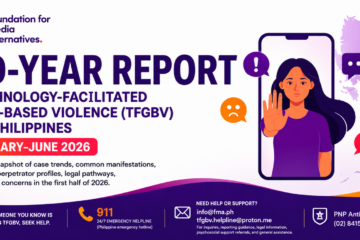
This early work also provides an important foundation for FMA’s subsequent initiatives on online gender-based violence (OGBV), technology-facilitated gender-based violence (TFGBV), feminist digital security, and the protection of women human rights defenders (WHRDs). Through its Gender and ICT programme, FMA has continued to combine research, advocacy, capacity-building, technology, and survivor-centered approaches to address the evolving risks that women and marginalized communities face in digital spaces.
0 Comments