Gender & ICT Training for Muslim Women

Internet Rights Are Human Rights: Gender & ICT: Training Workshop Report
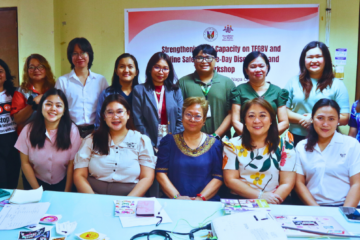
The Foundation for Media Alternatives (FMA), in partnership with United Youth for Peace and Development (UNYPAD), conducted a two-day training workshop on “Internet Rights Are Human Rights: Gender & ICT” on October 5–6, 2015, at the EM Manor Hotel & Restaurant in Cotabato City. The workshop brought together 29 Bangsamoro Muslim women to explore the intersection of women’s rights, information and communication technologies (ICTs), and internet rights.
The workshop aimed to strengthen participants’ knowledge and skills in using and accessing the internet, surface women’s experiences and challenges in relation to ICTs, and develop strategies for building a community of advocates who can promote women’s rights online. Key topics included violence against women (VAW) online, privacy, internet freedom, and online safety and security.
Understanding Women’s Rights
The first day began with a discussion on women’s rights led by Atty. Adjuria Kansi, who introduced the participants to the Magna Carta of Women (RA 9710). The discussion emphasized women’s rights to equality and non-discrimination and the responsibility of both public and private actors to uphold these rights.
Uztadza Albaya Badrodin, Education Program Supervisor and UNYPAD signatory to the ALIVE/Madaris program, followed with a discussion on the role and status of women from an Islamic perspective. She highlighted the rights and contributions of Muslim women and emphasized that seeking knowledge is an obligation for both women and men.
These discussions provided an important foundation for understanding women’s rights from both a legal and cultural perspective.
Women, ICT, and Everyday Life
On the second day, participants reflected on how they use ICTs in their daily lives through an activity-workshop and dramatization. They identified computers, mobile phones, and the internet as important tools for communication, accessing information, asserting their rights, and supporting livelihood activities.
At the same time, participants identified challenges that limit their meaningful use of technology. These included online harassment, cyberbullying and other forms of technology-based violence, poor connectivity, and the high cost of internet and mobile data.
A spectrogram activity encouraged participants to examine different perspectives on surveillance, privacy, and technology-based violence. Participants discussed the statement, “There is a need to put up CCTVs in all public and commercial establishments.”
Those who agreed emphasized the potential of CCTV systems for documentation and protection, particularly in addressing street crime. However, they stressed that spaces such as dressing rooms should remain private.
Those who disagreed raised concerns about who controls CCTV footage, how the information may be used, and the potential loss of privacy and increased sense of surveillance among citizens. The discussion highlighted the importance of considering both security and privacy when adopting new technologies.
Understanding the Philippine Digital Landscape
Liza Garcia, Gender & ICT Program Coordinator, provided an overview of ICT developments in the Philippines, including telecommunications, internet access, and social media use. The discussion highlighted the growing use of smartphones and mobile devices and how internet access was increasingly becoming part of everyday life.
Participants also watched a video explaining how the internet works and how data moves between networks. For some participants, this provided a new perspective on the internet as a system that enables people to connect, communicate, create content, and access services.
ICT and Violence Against Women
The discussion then turned to the intersection of ICT and gender-based violence.
Participants explored the question, “How do we define violence against women?” The discussion emphasized that violence is not limited to physical acts and that ICTs can create new spaces and mechanisms through which violence against women can occur.
Participants learned that ICTs are not gender-neutral. Women and men may use technology differently and may experience different risks and impacts. Technology can also change how violence is perpetrated through factors such as anonymity, automation, distance, affordability, and the rapid propagation of content.
Participants shared examples of technology-facilitated violence, including online sexual exploitation, the non-consensual sharing of intimate images, and cases where information shared online was used to locate or target women.
These discussions helped participants recognize that women’s rights must also be protected in digital spaces.
Internet Freedom and Human Rights
Nica Dumlao, Internet Rights Coordinator, discussed internet freedom and the recognition of the internet as an important space for exercising freedom of opinion and expression.
The discussion encouraged participants, particularly women, to make meaningful use of the internet while also understanding their rights and responsibilities online. It emphasized the need to recognize the internet as a space where human rights can be exercised and, at the same time, where rights can be threatened.
Understanding internet rights is particularly important for human rights and advocacy organizations, many of which increasingly rely on digital technologies for communication, organizing, and advocacy. Participants were encouraged to become familiar with laws and policies affecting online rights so they can better protect and defend themselves and their communities.
Key Learnings and Reflections
The workshop provided an important space for FMA, UNYPAD, and Bangsamoro women to exchange experiences and knowledge about the intersection of gender, human rights, and technology.
Participants gained a deeper understanding of women’s rights, internet freedom, privacy, technology-facilitated violence, and online safety and security. More importantly, the discussions connected these issues to their own experiences and advocacy work.
One participant shared that the training was particularly meaningful because, despite her previous work as a resource person on human rights, gender-based violence, and child protection, she had not previously considered the connection between internet use and human rights. For her, the workshop was an opportunity to recognize this connection and learn from others working toward similar goals.
Recommendations
Based on the discussions and participants’ feedback, the following recommendations emerged:
- Strengthen digital skills and security capacity among Bangsamoro women through hands-on training on digital security, secure communications, password management, encryption, and other practical skills.
- Conduct continuing learning activities on women’s rights, ICT, internet freedom, privacy, and technology-facilitated violence.
- Sustain the partnership between FMA and UNYPAD to support further capacity-building and advocacy initiatives within the Bangsamoro community.
The workshop demonstrated the importance of creating spaces where women can critically engage with technology, understand their rights, and develop strategies to navigate digital risks. Strengthening women’s digital knowledge and confidence is an important step toward ensuring that the internet becomes a space for empowerment, participation, and the exercise of human rights.
0 Comments